

What Retailer Haul-Away Covers, and Where It Stops
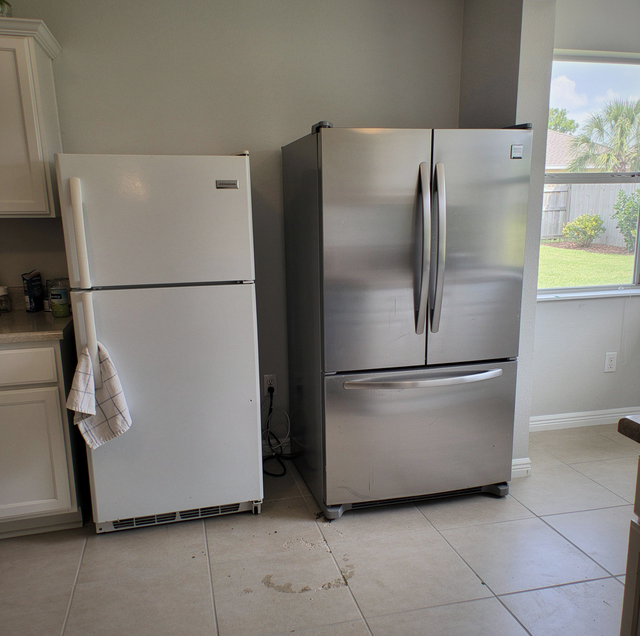
At checkout, right after you pick a delivery date, there's a small checkbox: haul away my old unit. You click it and move on, assuming that a new appliance purchase automatically clears the old one from your kitchen. It doesn't quite work that way. That checkbox typically applies to a specific, limited job and only applies when it was actually purchased as part of your order and its conditions are met at delivery. The terms of that job rarely make it past the order confirmation screen. What follows is what that option actually covers, and where it stops.
What the Haul-Away Checkbox Actually Covers
In most cases, haul-away means the crew takes your old unit off its spot and carries it out to the truck once your new one is in place. That's the full extent of the default service: a straight swap, your old unit out, your new one in, on the same visit. It typically applies only when you're replacing an appliance with a newer version of the same type, a refrigerator for a refrigerator, a range for a range, delivered on the same trip as the pickup.
Your delivery is typically scheduled as a single stop on a tighter route, with a set number of addresses and a fixed window at each. Haul-away is generally built as an add-on to that route rather than a standalone removal job. That's the operational reason the coverage stays narrow: the crew has time built into your stop for one extra lift, not for sorting through everything else you'd like gone.
That's worth knowing before your delivery date arrives, not after. If you're hoping the same visit clears out anything else in your kitchen, it helps to plan a separate removal for those items ahead of time rather than assuming the delivery crew will handle it on the spot.
The Like-for-Like Condition
The one-for-one rule is the part that trips people up most. You're buying a new appliance and assuming the whole category of stuff you don't want anymore rides along with it. In most cases, it doesn't. The unit coming off your truck has to be treated as a direct replacement for the unit going on it, same category, same general function, one unit for one unit.
Coverage here works something like the extra that rides along inside a larger bundle: it's listed as included, but that one line still carries its own separate conditions, and those conditions only line up when your order is a true swap. Buy a new refrigerator and haul-away is scoped to your old refrigerator. It isn't scoped to the chest freezer next to it, even though both are technically appliances leaving your kitchen that day.
It's worth checking what your specific order lists before delivery day, since the swap condition is usually spelled out on the confirmation rather than explained by the crew once they've already arrived.
The category itself usually has to be a major kitchen or laundry appliance, a refrigerator, range, dishwasher, washer, or dryer, rather than a smaller countertop unit or a specialty piece that isn't part of the standard delivery lineup.
What Has to Be Ready Before the Crew Shows Up
Haul-away typically assumes your old unit is already out of service and sitting clear of its connections by the time the crew arrives. In most cases, that means it needs to be unplugged, pulled away from the wall, and clear of its water line or gas connection well before your delivery window opens. The crew's visit is scoped around carrying a disconnected appliance to the truck, not around preparing one for removal.
If your old unit is still hooked up when the truck pulls in, the crew is typically not in a position to handle that step on the spot. Whatever needs to happen to safely disconnect an appliance is best arranged with a qualified technician ahead of your delivery date, not on the day itself.
This is a condition of the haul-away itself, not a courtesy. A crew that has to skip your old unit because it wasn't disconnected in time still finishes the rest of the delivery and moves on to its next stop, so the removal doesn't happen on a later pass of the same visit, and the haul-away for that unit simply doesn't happen.
What Gets a Unit Turned Away on the Spot
A handful of conditions commonly cause your old unit to be declined outright, even when everything else about your order checks out. A refrigerator or freezer that's still full or hasn't been defrosted is one of the most common: crews generally won't take a unit carrying food, standing water, or ice buildup inside it. Anything blocking the path out of your kitchen works the same way: furniture pushed in front of the unit, boxes stacked on top of it, a doorway too narrow for its dimensions.
None of this is arbitrary. A loaded appliance is heavier and less predictable to carry than an empty one, and a blocked path turns a routine lift into something the crew didn't plan for at your stop. When your unit doesn't meet the condition it was scoped for, the crew's option is typically to leave it behind and move on to the next address on the route.
A wet or leaking unit raises the same concern from a different angle. Water reaching flooring or walls during the carry becomes a cleanup problem for your home, not the crew's, so a leaking old unit tends to get the same treatment as a full one and stays put.
An unemptied refrigerator isn't just against the rules: loose shelves and heavy jars shift when the unit tilts onto a hand truck, creating a real tip-over and crushing hazard for anyone standing nearby during the carry.
Why a Second Appliance Isn't Included
If you've got an old washer sitting in your garage or a spare fridge in your Florida room, it's worth knowing upfront that haul-away doesn't extend to it just because a delivery truck is already parked in your driveway. The service is tied to the specific unit you're replacing, not to every appliance you'd like gone from the property.
This is the same one-for-one logic from the swap condition, applied to the rest of your house: your stop is built around one lift, tied to one order line. A second appliance sitting elsewhere in your home falls outside that scope, even if it's the exact same type of unit and even if it would fit in the same truck.
It's worth keeping that in mind while you're deciding what to buy in the first place. If you already know you'll want two old units gone at once, planning a separate pickup alongside your delivery saves you a second wait later.
Retailer Haul-Away vs an Independent Removal Booking
When your old unit falls outside what haul-away covers, a separate removal booking works differently enough that it's worth seeing the two side by side.
| Retailer Haul-Away | Independent Removal | |
|---|---|---|
| Scope | One-for-one swap only | Household kitchen and laundry appliances, any number, any room |
| Access | Crew works from the delivery path | Picked up from where it sits, not from the curb |
| Condition required | Must be empty, defrosted, disconnected | Handled as part of the job |
| Confirmation | Set by your delivery order terms | Written estimate confirms full scope |
| Timing | Tied to your delivery date | Same-day or next-day when the schedule allows |
Neither approach is better in every situation; they're simply built for different jobs. Haul-away exists to keep a straight swap moving without adding a step to the delivery route. An independent booking exists to handle everything a swap wasn't built to cover.
A written estimate confirms the complete scope before anyone shows up at your door, which covers cases haul-away doesn't reach: a second appliance, a unit on a different floor than the delivery path, or one that simply wasn't ready by the time the crew got there.
Before texting photos in, snap a shot of the connection behind your old unit: a standard cord and outlet, a water line, or a gas line. That single detail determines whether a licensed trade needs to disconnect it first.
Frequently Asked Questions
Typically, no. If you're replacing just the washer or just the dryer in a stacked pair, haul-away is scoped to the unit you purchased. The other half of the set stays in place unless you arrange separately for it to go.
Carry distance and stairs are usually part of what a delivery stop is scoped around, and a long carry or a steep stairwell can fall outside it. When that happens, the crew may decline that portion of the job rather than push past what your visit was scoped for.
No. Brand has nothing to do with it. What decides the like-for-like condition is the appliance category, not the manufacturer, so a different brand's dishwasher swapped for another dishwasher still qualifies. One wrinkle: if you're buying more than one appliance in the same order, haul-away is often scoped per unit rather than per order, so each old appliance still needs its own matching category on the list.
Not usually. Haul-away is scoped to the delivery path between your install point and the truck, and a unit sitting in a detached garage, an outbuilding, or up on a raised deck typically falls outside that path. That kind of pickup is generally handled as a separate booking rather than folded into the delivery stop.
Not necessarily. A built-in or under-counter appliance, such as a drawer-style dishwasher or an under-counter ice maker, is scoped differently from a freestanding unit in the same category. Getting it out involves cabinetry and often a different path out of the kitchen, so it can fall outside what the standard haul-away checkbox was built to cover.
Often, yes. Many crews follow the standard practice of securing or taping the door shut on an old fridge or freezer before it's loaded, a step tied to safety during transport rather than to the unit's condition.
Old unit still sitting in the kitchen after delivery day? — Get A written estimate for a straightforward pickup, no swap required. Polk Services LLC serves Lakeland, Highland City, and Mulberry. Call (863) 344-5806.
