

When to Regrade: Read the Ground, Not the Calendar
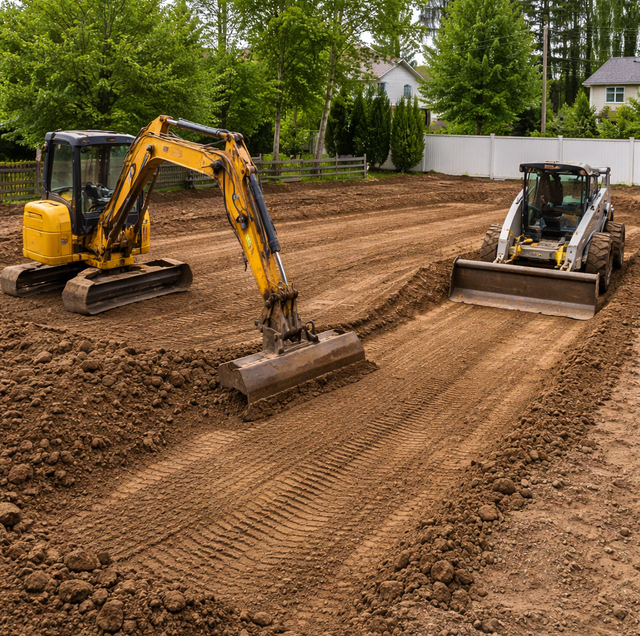
Quick Answer: Regrade when the ground is workable, not on a fixed date. Press a boot heel into the area: if it sinks and holds water, the soil is too wet. If it barely dents like packed brick, it's too dry to cut.
Homeowners often ask when the "right time" to regrade a yard is, expecting an answer tied to a month or a season. There isn't one. What actually determines whether a crew can do the work well is the condition of the soil on the day the equipment shows up, and that condition can swing from too wet to too dry and back again more than once across a single year, depending on recent rainfall and how the ground drains.
Why Ground Condition Decides the Timing, Not the Date
A skid steer or a mini excavator is heavy, and that weight rides on tracks or wheels pressing into a fairly small footprint of ground. For the machine to move, turn, and pull a grading blade across the surface without tearing it up, the soil underneath has to be load-bearing: firm enough to support the equipment's weight without deforming, but not so hard that a blade can't bite into it and shape it. That middle range is what "workable" means in this trade, and it has nothing to do with the month on a calendar. It has to do with how much moisture is currently in the top several inches of soil.
Regrading cuts into the ground, and buried gas, power, water, or communication lines don't always sit where old records show. Call 811 a few business days before any regrading work so those lines get marked before equipment starts cutting.
When the Ground Is Too Wet to Work
Saturated soil has its pore spaces filled with water rather than air, which changes how it behaves under load. A dry, workable soil resists compression because the particles interlock; a saturated one doesn't, because the water gives everything room to shift. Equipment tracks or tires sink instead of riding on top, wheels spin and dig themselves deeper, and every pass leaves a rut where a smooth grade should be. Grading wet ground doesn't just look messy afterward. It actively works against the goal: pushing a blade through saturated clay smears and compacts it into a dense, slick layer that sheds water poorly once it dries, which is close to the opposite of what a regrade is supposed to fix.
A yard doesn't have to be visibly flooded for this to apply. Soil that looks fine on the surface can still be saturated a few inches down after a heavy rain, especially in low spots or areas with poor drainage to begin with.
When the Ground Is Too Dry to Shape
The opposite problem shows up after a long dry stretch, and it's most obvious in heavy clay soil. Clay that's fully dried out behaves almost like a fired material: dense, hard, and resistant to being cut. A blade skips and chatters across it instead of shearing a clean layer, leaving ridges and an uneven surface instead of a smooth grade. Dry clay can also crack into hard chunks that don't compact back down evenly, so even after the equipment is done, the finished grade can be lumpy or prone to reopening cracks later.
Sandy or loamy soil doesn't have this problem to the same degree, since it doesn't cure as hard as clay does, but even sandy ground that's bone-dry can be loose and shifty under the weight of equipment, which makes it hard to maintain a consistent slope.
The fix for overly dry clay: a slow, deep soak days ahead of the work, not a quick surface spray right before equipment arrives. Running a sprinkler or a soaker hose over the area for several hours, or repeating light watering over a couple of days, lets moisture work down a few inches, softening the clay enough to cut without turning the surface to mud.
A grading blade cuts and shifts soil, not concrete or rock. If a section won't yield to a blade at all even after a slow soak, that usually points to buried debris or compacted subgrade rather than the moisture itself.
Reading the Ground Instead of Guessing
The most reliable test doesn't require any tools. Press a boot heel firmly into the area you want regraded. If it sinks past the sole and water beads up around the print, the ground is too wet and needs time to drain. If you have to stomp hard to leave any mark at all, and the surface feels closer to packed brick than soil, it's too dry to cut cleanly. Ground that's actually workable leaves a firm, clean heel print: compressed, but without pooling water around it.
A second check worth doing alongside the boot test: grab a handful of soil from the area and squeeze it into a ball. If water runs out between your fingers or the ball smears rather than holding an edge, the ground is still too wet. If it won't clump at all and just crumbles back to loose grains and dust, it's too dry. The moisture range that actually works holds a loose ball that breaks apart cleanly with a light tap, not one that stays balled up or refuses to form at all.
Neither test takes more than a minute, and running both before scheduling equipment saves a wasted trip and a torn-up yard.
What to Do When the Timing Doesn't Line Up
Ground conditions rarely stay fixed for long, which is actually useful. A yard that's too wet after a stretch of rain often becomes workable within a day or two once surface water drains and evaporates, though dense clay soil holds moisture noticeably longer than sandy or loamy ground does. On the dry side, a planned soak a few days before a scheduled job is usually enough to bring hard clay back into a workable range without waiting for rain.
If only part of a yard is too wet or too dry while the rest is ready, a crew can often grade the workable sections first and come back for the rest once conditions catch up, rather than forcing the whole job on a schedule the ground isn't ready for.
Knowing the Timing Was Right
The clearest sign that the ground was in the right condition when it was graded shows up after the fact: a smooth, even surface without ruts, ridges, or crumbled chunks, and soil that compacts evenly under light foot traffic rather than staying loose or cracking apart. If a finished grade looks torn up in tracked lines or lumpy with hard clods, that's usually a sign the equipment went to work before the ground was actually ready, not a flaw in the grading itself.
Frequently Asked Questions
There's no fixed number of days because it depends on soil type and how much rain fell. Sandy soil can be workable again within hours to a day; dense clay can hold water for the better part of a week. Recheck the boot heel test daily rather than counting days on a calendar.
Plywood sheets or engineered ground mats spread a machine's weight over a larger area and can help on marginal, slightly damp ground, reducing the chance of rutting. They don't solve fully saturated soil, though. If the ground has standing water or a boot heel sinks and holds water, mats won't make it workable.
That layered profile is trickier than either soil alone. The sandy surface can look and feel dry and workable within hours of rain, while the clay a few inches under it stays saturated for days, so a boot-heel test on the top few inches can pass, even as the ground a blade actually cuts into is still too wet to work. A soil probe pushed down four to six inches, not just a surface check, is worth the extra minute on a yard like this.
A garden trowel or a soil probe pushed down four to six inches will show whether the ground is still wet underneath even if the top surface looks dry. This matters most after equipment has been sitting unused nearby for a few days, since surface soil can dry out and look ready while subsurface moisture lags behind.
It's common, and it's usually fine to grade around it: a crew can shape the rest of the yard first and come back to the low spot once it's dried enough for equipment, the same section-by-section approach used when part of a yard is simply on a different drainage timeline than the rest. Worth checking before assuming it's just slow to drain: a spot that stays wet noticeably longer than the surrounding ground, even after a dry stretch, sometimes points to a shallow water table or compacted subsoil under that one section rather than ordinary rain drainage.
Push a screwdriver or a thin probe into the soaked area after the water has had time to sink in overnight. It should slide in with noticeably less resistance to a depth of three or four inches; if it stops hard well before that, the soak didn't penetrate, and another round is needed before equipment shows up. A surface that looks dark and damp but glazes over or puddles instead of soaking in usually means the water is running off faster than the clay can absorb it, which calls for slower, lower-volume watering rather than more water at once.
A contractor who checks ground conditions before starting isn't stalling. Equipment and soil either work together on a given day or they fight, and reading the ground first determines which happens. That quick check before the first pass with a blade is what separates a clean, even grade from a yard that needs to be redone.
Schedule a grading assessment — a crew that checks ground conditions before running equipment, not just a date on a schedule. Polk Services LLC serves Lakeland, Highland City, and Mulberry. Call (863) 344-5806.
