

Gravel Driveway Downsides: 6 Trade-Offs to Weigh First
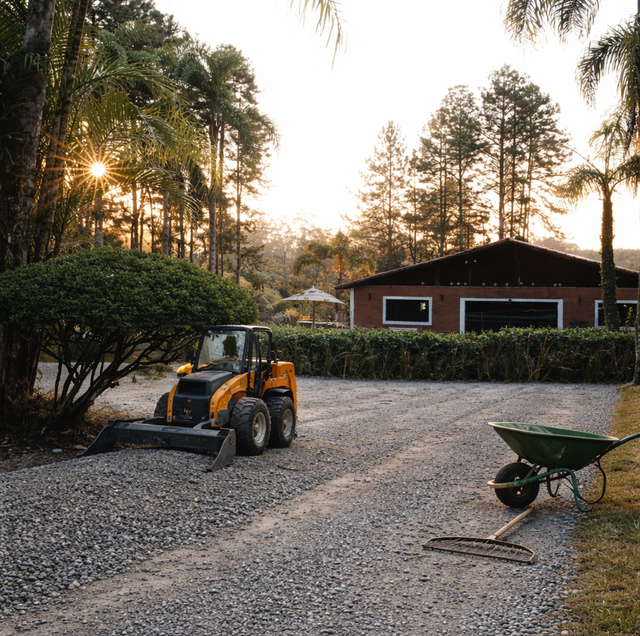
Most driveway articles read like a sales page: gravel is affordable, gravel drains well, gravel looks great. All of that can be true and still leave out the part that matters once the truck pulls away and the driveway is yours to live with. Gravel is a low-maintenance surface, not a no-maintenance one, and the difference between those two words is where a lot of homeowners get surprised in year two.
It's the list a straight-shooting installer would actually give you if you asked, "Okay, but what's the catch?" Six real trade-offs, what causes each one, and what proper installation and upkeep do to keep them from turning into a redo.
It Needs Periodic Top-Up and Regrading
Gravel is loose material sitting on top of the ground, and every pass of a tire, every hard rain, and every gust of wind moves a little of it somewhere it wasn't before. Over months and years, that adds up to thin spots where you park most often, low spots where water tends to collect, and a general leveling-off of whatever crown or slope the driveway started with. A surface that looked crisp and full on installation day will look a little tired a year or two later even if nothing went wrong.
This one isn't avoidable with any material; it's the nature of loose aggregate. What keeps it manageable is starting with a properly compacted base and a correct finish depth. Hence, the material that does migrate comes off a stable foundation rather than sinking into the soft ground beneath. A yearly or as-needed regrade, pulling material back from the edges and low spots into the worn areas, resets the surface for a fraction of what a full reinstall costs and is honestly just part of owning a gravel driveway, the same way a lawn needs mowing.
Weeds Come Back Without a Fabric Barrier
Any bare or thin patch of gravel is an open invitation for whatever seed blows in or was already waiting in the soil underneath, and the longer the local growing season runs each year, the faster that shows up. Skip the geotextile fabric layer between the ground and the gravel, or let the gravel wear thin enough in spots to expose dirt, and you'll be pulling weeds out of your driveway within a season, not years down the line.
A fabric barrier laid before the gravel goes down is there to keep the stone and soil separated, not as a dedicated weed product, but blocking that contact also blocks light to the soil and stops most root growth before it starts, and it's a step worth insisting on rather than skipping to save a little on the job. Even with fabric installed correctly, expect the occasional weed working through a joint or a thin spot; a driveway isn't sterile ground. Where fabric is missing, or the gravel has worn down over time, a broadleaf treatment or hand-pulling on a schedule keeps it from getting away from you again.
Dust Shows Up in Dry Stretches
Any driveway with fine material mixed into the aggregate, whether that's the natural fines in limerock and crushed concrete or dust generated as gravel breaks down under traffic, will kick up some dust when things dry out. It's more noticeable on a longer dry run, more noticeable if the driveway sees regular vehicle traffic, and more noticeable if you park near a window or a patio where the dust settles somewhere you'll see it.
Material choice cuts both ways here. Fines are what let millings, crushed concrete, and limerock lock into a firm, semi-bound surface, and fines are also what go airborne when it's dry. Washed, coarse stone with the fines screened out barely dusts at all, but it never knits together the same way either, so it stays looser underfoot and migrates more instead. A light watering during a stretch of dry weather settles the surface dust down without needing anything more than a hose. It's a minor annoyance for most homeowners, not a dealbreaker, but it's worth knowing about before the first dry month rather than after.
Material Migrates and Spreads at the Edges Without Containment
Gravel doesn't stay in a neat rectangle on its own. Tires clip the edge turning in, water sheets off the sides during a downpour, and loose stone gradually walks itself out into the yard, the ditch, or the street over time. A driveway with no defined edge tends to widen and thin out along its border faster than the interior wears, which is often where a gravel driveway starts to look ragged.
Edge restraints, whether that's steel edging, wood edging, or simply a clear grade transition, give the material something to push against instead of just spreading. Where edging isn't practical, keeping the perimeter graded and pulling drifted material back in periodically does most of the same job with more upkeep and less upfront cost. Either way, an unrestrained edge is the one downside on this list that's almost entirely a design choice rather than an inevitable property of gravel itself.
Ruts Can Form Under Sustained Heavy Traffic If the Base Isn't Right
Every gravel driveway takes some tire wear in the same paths, day after day, and that's normal. What isn't normal is a rut deep enough to catch a tire or hold standing water, and that almost always traces back to a base that wasn't compacted to the depth the traffic demanded. A driveway built for occasional car traffic and then used regularly by a work truck, a boat trailer, or delivery vehicles is carrying more load than its base was ever prepared for.
The fix starts before the gravel goes down: a base built and compacted for the actual expected traffic, not just the lightest likely use case, holds up under repeated heavy loads far better than a thin base topped with extra finish material to compensate. Once ruts do form, filling and recompacting the low spots, ideally before the next heavy rain turns them into channels, stops the problem from digging in deeper each time a tire finds the same low path.
Mud Forms in Low Spots When Grading Is Off
A gravel driveway drains well when water has somewhere to go. When it doesn't, whether that's a low spot that never got graded out, a flat stretch with no crown, or a section where the surrounding yard sheds water back onto the drive, that water sits, softens the base underneath, and turns firm gravel into standing mud. It's the downside homeowners notice fastest, because a muddy patch by the garage or front walk is impossible to ignore.
This one comes down almost entirely to grading done right the first time: a crowned or properly sloped surface that carries water off to the sides rather than letting it pool, tied into drainage that actually has somewhere to go. On a flat lot, that might mean a slightly more deliberate slope built in during installation rather than assuming the ground will handle it. Where a soft or muddy spot has already developed, regrading that section and confirming that the surrounding drainage isn't dumping extra water into it usually solves it without having to redo the whole driveway.
Weighing the Trade-Offs Honestly
These six issues are the realistic maintenance picture that usually gets left out of the sales pitch, and every one of them traces back to the same two things: how the driveway was built and how much upkeep it gets afterward. A driveway with a properly compacted base, the right material for the traffic it'll see, defined edges, and fabric under the finish layer will deal with far less of this list than one that skipped those steps to save time or money going in. Gravel earns its reputation as a practical, lower-maintenance driveway option; it just isn't a walk-away-and-forget-it one, and knowing that going in is what keeps the driveway looking right five years from now instead of two.
Frequently Asked Questions
Yes. Materials with a range of particle sizes and fine material mixed in, like crushed asphalt millings or crushed concrete, compact into a tighter surface that resists rutting and migration better than a single-sized rounded stone like pea gravel or river rock, which stays loose and needs topping off more often regardless of how well the base was built.
Most driveways benefit from a light regrade once a year, pulling drifted material back from the edges and low spots into the worn tire paths. However, a driveway carrying heavier or more frequent traffic, like a work truck or trailer, may need attention closer to twice a year.
It's possible to pull back the existing gravel, lay fabric over the graded base, and relay the material, but it's more labor than installing it the first time around; if weeds are only an occasional problem, spot-treating or hand-pulling on a schedule is usually the more practical fix for an existing driveway.
A rippled, washboard-like surface usually forms from repeated braking or accelerating in the same spot, like near a garage or a turn onto the street, combined with a finish layer that's slightly too loose or too thick for the base underneath; regrading and recompacting that stretch, sometimes with a slightly thinner finish lift, generally resolves it.
Yes, shallow edging is one of the more common reasons a restrained edge still spreads. Steel or wood edging that's only pinned an inch or two into the ground can get pushed outward by the same lateral pressure it's supposed to resist, especially where the base runs thick. Edging set deep enough to engage the compacted base, not just the loose surface material, holds its line far longer. On a crowned driveway, edging also needs an occasional gap or a slight low point built in; otherwise, it can dam water against the shoulder instead of letting it drain off the side the crown is meant to send it.
Generally yes, right after installation, since fine material is what becomes airborne, but that same fine content is also what lets a material like millings or crushed concrete lock together and cure into a tighter surface over time. A freshly delivered fines-heavy driveway typically needs several weeks of regular traffic and at least one good soaking rain before it fully knits together and dust drops off; watering it during that break-in period speeds up the settling rather than waiting on rain alone.
Get a free estimate for your gravel driveway install or repair — see the real trade-offs and a build plan that keeps them in check. Polk Services LLC serves Lakeland, Highland City, and Mulberry. Call (863) 344-5806.
