

Why Your Yard Floods After Rain (and the Fix)
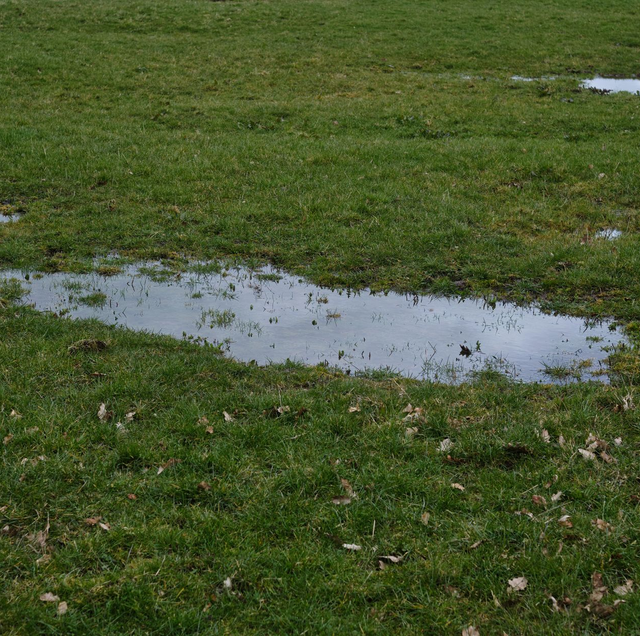
Quick Answer: Water pools in your yard because the ground is not shedding it or soaking it up where it falls. The most common reason is grading: the yard is flat or tilts back toward the house instead of away from it, so rain has nowhere to run and collects in the low spots. Compacted soil, buried depressions, misaimed downspouts, and missing drainage make it worse. The fix is to regrade for a proper slope away from the foundation, fill the low spots, redirect downspouts, and add a swale or French drain where the water still has nowhere to go.
You mow around the same soggy patch every week, and after a real downpour, it turns into a shallow pond that sits for days. The grass there is thin or dead, the ground squelches underfoot, and mosquitoes have moved in. Standing water is annoying, but it is also a signal. When water pools after rain, the ground where it lands is not doing one of two jobs: shedding the water off to somewhere it can drain, or absorbing it down into the soil. Figure out which of those is failing, and the fix follows.
What Standing Water Is Actually Telling You
Rain has to go somewhere. On a healthy lot, it does two things at once: most of it runs downhill across the surface toward a street, ditch, or drain, and the rest soaks into open soil and keeps moving down. A puddle that lingers means both of those paths are blocked at that spot. The surface is not tilted enough to carry water away, and the soil underneath is too tight or too saturated to take it in.
Heavy rain is the trigger people notice, because a hard storm dumps water faster than any yard can handle for a few minutes. But a downpour is not the cause. A yard graded and drained correctly sheds heavy rain within an hour or two and dries out; a yard with a slope or soil defect holds water after a heavy rain and again after every ordinary one. The storm makes the existing problem visible. That is why this is a year-round issue, not a wet-season one: the defect sits there in every month, and any rain that comes finds it.
The Reasons Water Collects
Most pooling traces back to one or more of these, roughly in the order they show up.
Poor grading or slope: This is the number one cause. The yard is flat, or worse, it slopes back toward the house instead of away from it. Water follows gravity, so if the ground does not fall away from the structure, rain runs toward the foundation and settles in whatever spot sits lowest. You can have perfectly good soil and still get standing water if the surface has no consistent fall to carry it off.
Compacted soil: Soil that has been driven over by construction equipment, packed down over the years, or is naturally heavy clay, loses its open pore space. Water cannot work its way down through it, so it sheets across the top and sits. This is common on newer builds where trucks and machinery run across the lot, and in yards with dense clay that shows up in many areas. The surface looks fine until it rains, then the water just beads and pools.
Low spots and depressions: Sometimes the trouble is a single dip. An old stump hole that was filled and settled, a spot where fill was never fully tamped, a rut from a delivery truck, a place where the yard was cut for a utility line, and backfilled loosely. Water finds the low point and stays there while the rest of the yard drains fine.
A high water table or slow-draining soil: When the groundwater sits close to the surface, or the soil is dense clay with a slow percolation rate, there is simply no room below for rain to go. The ground is already near capacity, so new water has nowhere to drain and backs up on top. This is more about the soil and site than the surface shape, and it usually needs a drain rather than a regrade.
Downspouts dumping in one place. Gutters gather every drop from a roof and funnel it through a downspout. If that downspout empties right at the base of the house, it concentrates hundreds of gallons into a few square feet of soil that cannot possibly absorb it. That is why a chronic wet spot often sits directly under a downspout elbow.
Hardscape shedding runoff. A driveway, patio, or walkway does not absorb anything. Every drop that hits it runs off the edge. If that edge points into the yard, the paving is feeding extra water into the soil next to it, overwhelming an area that would otherwise handle normal rain.
Blocked or missing drainage. Older lots and lots that were never graded for it often have no swale to guide water, no French drain to catch it, and no culvert to move it under a driveway. Without a planned path, water pools by default. Existing drains can also clog with silt, roots, and leaves, and quietly stop working.
Why It Is Worth Fixing
Standing water is not just an eyesore. Grass roots need air, and a spot that stays wet for days drowns them, which is why the puddle zone is usually bare or thin. Still water is also a mosquito nursery; a female mosquito needs only a small amount of standing water to lay a batch of eggs, and a recurring puddle keeps supplying it.
The bigger concern is water against the house. When rain pools next to the foundation, it soaks the soil that carries the building's weight. Saturated soil shifts and softens, which can lead to uneven settling, cracks, and water seeping through the foundation wall. A puddle out in the middle of the lawn is a nuisance; the same puddle against the footing is a structural problem in slow motion. That difference determines how urgently a wet spot needs attention.
Reading the Clue Before You Dig
Your yard behaves like a table with a spilled glass of water: if the tabletop tilts, the water runs to the low edge and off; if the top is dead level and the surface is sealed, the water sits in a sheet until it evaporates. Your lot works the same way. The fix depends on which part of that picture is wrong, so it pays to sort the problem into one of three buckets before anyone moves dirt.
If water pools in a broad area or runs toward the house, and the ground has no clear fall away from the structure, you have a grading and slope problem. The answer is to regrade the surface so it carries water away.
If the yard has a slope but water still beads on the surface and drains slowly long after the rain stops, you have a soil absorption problem. The surface shape is fine; the ground underneath will not take water. That calls for amending compacted soil, aerating, or installing a drain to give the water a path it cannot find on its own.
If the wet spot sits right under a gutter outlet and the rest of the yard drains fine, you have a downspout problem, and the fix is as simple as moving that water somewhere else.
Most flooded yards are some mix of these, which is why a proper look at the site matters more than guessing.
The Fixes That Actually Work
Regrade for a proper fall: The foundational fix for most yards is establishing a slope that carries water away from the house. A commonly cited target is a fall of about six inches over the first ten feet out from the foundation. That is enough drop to move water away from the structure before it can soak in near the footing. Reshaping the grade so the whole yard drains toward a street, ditch, or low corner, rather than toward the house or a random dip, solves the largest share of pooling problems.
Fill the low spots: Where the trouble is a settled depression, filling and compacting it to match the surrounding grade removes the trap. The key is compacting the fill properly so it does not settle again and recreate the same dip a year later.
Extend the downspouts: Getting roof water away from the foundation is one of the cheapest, highest-return fixes there is. Extending a downspout well out into the yard, or tying it into an underground drain line that carries it to daylight, often clears a chronic wet spot on its own.
Add a swale, French drain, or dry well: When regrading alone cannot move water off a low or clay-heavy lot, a drainage feature does the work. A swale is a shallow, shaped channel that guides surface water along a planned route. A French drain is a gravel-filled trench with a perforated pipe that collects water and carries it underground to a discharge point. A dry well is a buried chamber that holds water and slowly releases it into the ground. Which one fits depends on how much water there is and where it can safely go.
Aerate and amend compacted soil: Where the soil itself is the bottleneck, breaking up compaction and incorporating material that opens the structure allows water to percolate rather than sheet. On heavy clay, this is often paired with a drain, since amending alone may not be enough to move a large volume off the lot.
Grading and drainage work leans on heavy equipment and an accurate read of how the whole lot drains, which is why it is professional work rather than a shovel-on-a-Saturday job. Cutting the grade wrong or aiming a drain at the wrong outlet can move the problem instead of solving it, or push water toward a neighbor. A few cautions in the meantime: keep children and pets away from standing water, dump out anything that collects water so mosquitoes have nowhere to breed, and never run machinery or dig near buried utility lines without first having them located.
Frequently Asked Questions
Poor grading. The ground is either flat or actually slopes back toward the house instead of away from it, so rain has nowhere to run. To prove slope is the culprit before you dig, run a garden-hose flood test and watch which way the water sheets across the surface, or set a level on the grade to see the actual fall. If the water crawls back toward the house or pools rather than running off, grading is confirmed, and you can have decent soil and still flood when the surface has no fall to shed the water.
A common target is a fall of about six inches over the first ten feet out from the foundation. That amount of drop is enough to carry water away from the house before it has a chance to soak in near the footing. A hardscape like a patio or driveway needs its own pitch, roughly a quarter inch per foot, to shed water off its surface, separate from the lawn's fall, so a flat slab can flood an area even where the surrounding grade is correct. Past that first ten feet, a gentler, continued slope toward a street or low corner keeps it moving.
Because flat is the problem. Level ground has no slope to shed water, and if the soil is also compacted, it will not absorb it either. To tell a soil-absorption problem from a pure slope problem, run a percolation test: dig a hole, fill it with water, and time how fast it drains. Quick drainage points you back to grading, while water that lingers in the hole for hours flags soil that will not take water and needs a drain. A yard that looks perfectly even to the eye can still lack the slight, deliberate fall that drainage requires.
Yes, and often. A single downspout empties an entire roof's worth of runoff into one small patch of soil beside the foundation, which overwhelms that area no matter how good the soil is. Aim to discharge each downspout at least 4 to 6 feet from the foundation, or tie it into a buried line that ends at a pop-up emitter in the yard, where the water can surface and spread. Getting the outlet that far off the footing frequently clears a chronic wet spot that no amount of yard work would fix on its own.
A swale is a shallow, shaped channel that guides surface water along a planned path toward where you want it to go. A French drain is a trench built around a four-inch perforated pipe wrapped in a filter fabric sleeve (called a sock) set over gravel, and that fabric is what keeps silt from washing in and clogging the pipe over time. One or both is used when regrading alone cannot move water off the lot, typically on a low-lying property or one with heavy clay that drains too slowly to rely on slope.
Because water pools against the foundation, soaking the soil that supports the building's weight. Saturated soil shifts and softens, which can lead to settling, cracks, and leaks over time. A few warning signs indicate that water is already reaching the structure: new cracks in interior walls, doors that suddenly stick in their frames, and a chalky white residue called efflorescence on basement or foundation walls, which is mineral salts left behind as water passes through the concrete. Any of those makes drainage against the house an urgent fix rather than a cosmetic one.
Get your lot graded and drained right — so rain runs off instead of pooling against your home, from grading and ground leveling in Bartow to the rest of the radius. Polk Services LLC serves Lakeland, Highland City, and Mulberry. Call (863) 344-5806.
