

Who to Call About Standing Water in Your Yard: 4 Options
Quick Answer: Most standing water is a grading and drainage problem, so a grading/drainage contractor is the right first call. A landscaper can handle cosmetic fixes but not structural regrading. A plumber only matters if the water ties to a leak or sewer line.
You've got a spot in the yard that stays wet long after everyone else's has dried out, and now you're staring at a phone trying to figure out who actually handles this. It's a fair question, because "yard water" sits in a gap between at least four different trades, and calling the wrong one wastes a service call and a day off work. Use the breakdown below to sort out who does what, so the first call you make is the right one.
Why This Isn't a One-Trade Problem
Water on the ground doesn't announce its own cause. The same puddle in the same spot could be the result of soil that's too compacted to absorb rain, a slope that pushes water toward a low point instead of away from it, a supply line leaking underground, or a septic drain field that's failing. Each of those has a completely different fix, and each fix belongs to a different license and skill set. A grading contractor can't repair a pipe. A plumber can't regrade a yard. Matching the symptom to the right trade is most of the battle, and it's worth doing before anyone shows up with equipment.
Before any digging to investigate or fix the problem, call 811 (the call-before-you-dig line) a few business days ahead. It marks buried gas, power, water, and communication lines for free, whether the work is done by a contractor or by hand.
The Grading and Drainage Contractor
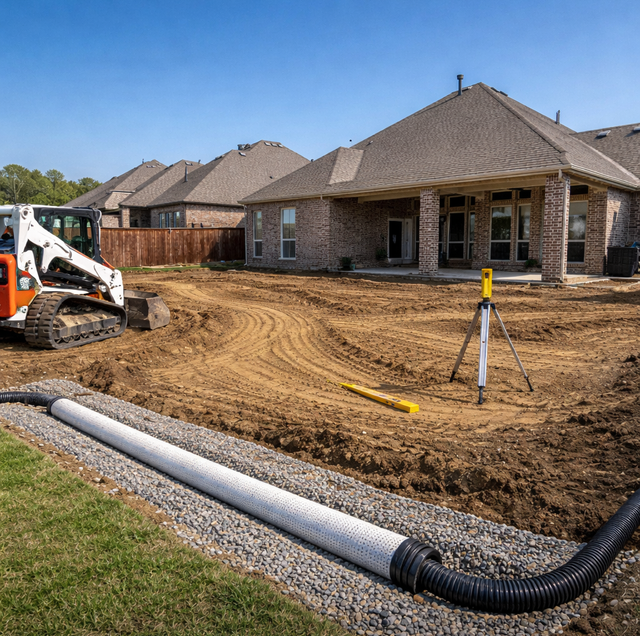
This is the pro who handles the physical earthwork: reshaping the ground so that water moves off the property rather than collecting on it. That covers regrading a low spot or a section that slopes back toward the house, and cutting a swale to redirect surface runoff as part of that regrade. A grading contractor also brings equipment like a mini skid steer for reshaping work that would take days by hand, and reads the site's actual slope with a level or laser transit rather than guessing. Below-grade drainage structures like a French drain or dry well are sometimes part of the same company's scope and sometimes a separate line item, so it's worth asking directly which side of that line a given contractor covers.
This is the right call when the water sits in a specific low area, when it takes more than a day to drain after rain (rather than clearing in a few hours), or when it's tracking toward the foundation instead of away from it. If the fix requires actually moving soil or changing the shape of the yard, this is the trade that does that work.
The Landscaper
A landscaper's scope is cosmetic and at the planting level, not structural. That means mulch, sod, plant beds, edging, and small surface touch-ups. Some landscapers will happily quote "fixing" a wet spot with a load of topsoil dumped over it, and that's worth knowing about before you hire one for this specific problem: adding a few inches of loose soil on top of a compacted or poorly sloped yard doesn't change the grade underneath, and the water usually comes back within a season, sometimes worse because the new soil holds moisture longer than what was there before.
Cosmetic surface work: A landscaper can handle mulch, planting, and minor leveling of an already well-graded bed. Structural regrading: Reshaping the slope, cutting drainage channels, or installing pipe and gravel systems is outside a standard landscaping scope and belongs with a grading contractor.
If a landscaper proposes a fix that only involves adding material on top rather than changing the underlying slope or installing a drainage path, that's a sign the actual cause hasn't been addressed.
The Plumber
A plumber only enters the picture when the water isn't coming from the sky or from poor surface drainage at all; it's coming from a pipe or a septic system. A handful of signs point that direction: the wet spot shows up even during dry stretches with no recent rain, there's a sewage smell near the area, the grass over that spot is unusually green and lush compared to the rest of the yard, or the water traces back to a specific fixture line or the path between the house and a septic tank or sewer connection. A plumber can pressure-test a line, run a camera through it, and locate a leak or a break that a grading contractor has no way to diagnose or fix.
Standing water near a septic tank or drain field, especially with a sewage smell, can mean surfacing effluent. Keep kids and pets away from that area and call a plumber or septic service rather than digging around it yourself.
The distinction matters because the two problems look almost identical on the surface: a plumbing leak and a poorly graded low spot can both produce a soggy patch of lawn, but only one involves running water and rising utility bills, and only one gets worse with time if it's ignored. If the yard has been graded correctly and there's still a persistent wet area with no obvious drainage explanation, a plumbing source is worth ruling out before assuming it's a grading issue.
The Civil Engineer or Licensed Surveyor
For most homeowners with an isolated wet spot, this step never comes up. It becomes relevant in a narrower set of situations: when a formal, stamped drainage plan is required for a permit, when water is crossing a property line and creating a dispute with a neighbor, when a lot has a complex grading history involving multiple structures or a shared drainage easement, or when a project is large enough that a municipality or HOA requires engineered plans before work can proceed. A civil engineer calculates drainage capacity and produces the documentation a permitting office or attorney would need. A licensed surveyor establishes exact property boundaries and elevations when that precision matters for a dispute or a formal plan.
Whether a specific project requires this level of documentation depends on local permitting rules and the scope of the work, so it's worth asking a permitting office or an attorney directly rather than assuming either way. For an isolated wet spot on a single residential lot, most projects are resolved at the grading contractor level without ever needing an engineer or surveyor.
How to Figure Out Which One You Need
Start with timing and pattern, since that's usually the fastest way to sort the four options. Does the water only appear after rain, and does it drain out within a day or two? That points to a grading and drainage problem, and a grading contractor is the right first call. Does the wet area exist even without recent rain, or is there an odd smell or oddly green grass over one specific line or spot? That points to a plumbing or septic source, and a plumber should look at it before anyone touches a shovel for drainage work. Is the fix purely cosmetic, like a bare patch or scraggly bed around an already-solved low spot? That's landscaper territory. Is the project tied to a permit, a property-line dispute, or a formal drainage plan a city or HOA is requiring? That's when a civil engineer or surveyor gets involved.
Most standing-water calls land in the first category. It's the most common cause by a wide margin, which is why a drainage contractor is usually the right starting point, but running through the checklist above for a minute or two before dialing saves a wasted trip and gets the right equipment and expertise on-site the first time.
Sorting this out isn't about picking the "best" contractor; it's about matching the actual cause to the trade built to fix it. A grading contractor moves soil and manages water at the surface. A landscaper handles what grows on top of a yard that's already properly shaped. A plumber deals with water that shouldn't be underground in the first place. An engineer or surveyor steps in only when documentation, not digging, is what the situation calls for. Match the symptom to the trade first, and the rest of the job tends to go faster.
Frequently Asked Questions
No, and be cautious of anyone who claims they can diagnose and repair both without bringing in a plumber for the pipework. Opening or repairing a supply, sewer, or septic line is a separate trade with its own tools and training, not a grading-contractor task. If a site visit reveals signs of both a poor grade and a possible leak, expect two separate scopes of work, sometimes from two different companies, even if one refers you to the other.
A useful site visit includes checking the yard's slope with a level or laser transit, noting where water enters the property (from a neighbor's yard, downspouts, or a street), tracing where it currently pools or exits, and checking soil type by digging a small test hole, since sandy soil drains very differently from clay-heavy soil. That assessment is what a fix like a swale, French drain, or dry well gets sized from.
Look for the tell before assuming: water arriving from next door usually shows a visible entry point along the shared line, a low swale, a gap under a fence, a downspout aimed your way, rather than pooling generally across the yard. Grading work can often redirect that water once it's on your own lot without needing anyone else's involvement, reshaping your side to carry it around the low areas instead of trying to stop it at the line. If the volume is heavy enough that redirecting it on your own lot isn't realistic, that's when a surveyor or, in a dispute, an attorney becomes the more relevant call before anyone starts moving soil.
Not always. A dry well works by holding water underground and letting it soak in gradually, which depends on the surrounding soil being able to absorb water at all. In heavy clay or in an area with a naturally high water table, a dry well can fill up and stay full, doing little good, and a full regrade is often the more reliable fix in that soil. Whether a dry well, a French drain, or a regrade is best depends on what a soil test at the specific site shows, not on a default answer that applies everywhere.
For a suspected supply leak, they isolate the house side of the meter, close every fixture, and watch whether the meter's low-flow indicator keeps spinning; a static pressure test that shows a slow drop over a few minutes confirms it without digging first. For sewer or septic, a camera run down the line is the standard next step, since it shows the actual break or root intrusion location rather than just confirming water is present. The two tests use different equipment entirely, which is part of why a plumber needs to know which one is suspected before they show up.
Ask what target slope they're grading to and why (a rough number like roughly 2 percent away from structures is a common benchmark for lawn areas), what happens to water once it leaves the regraded area (where it discharges to), whether the soil type was checked before recommending a fix, and whether they call 811 before any digging. A contractor who can answer all four specifically, rather than in general terms, is more likely to size the fix correctly the first time.
Figuring out who to call is the first step, not the whole job. Once the cause is clear, the actual fix, whether it's a few days of regrading or a single pipe repair, is usually the simpler part of the two.
Get a site visit and honest read on what's causing your standing water — no guesswork, no wrong-trade referral. Polk Services LLC serves Lakeland, Highland City, and Mulberry. Call (863) 344-5806.
