

Concrete Walkway Removal or a New Path: How to Decide
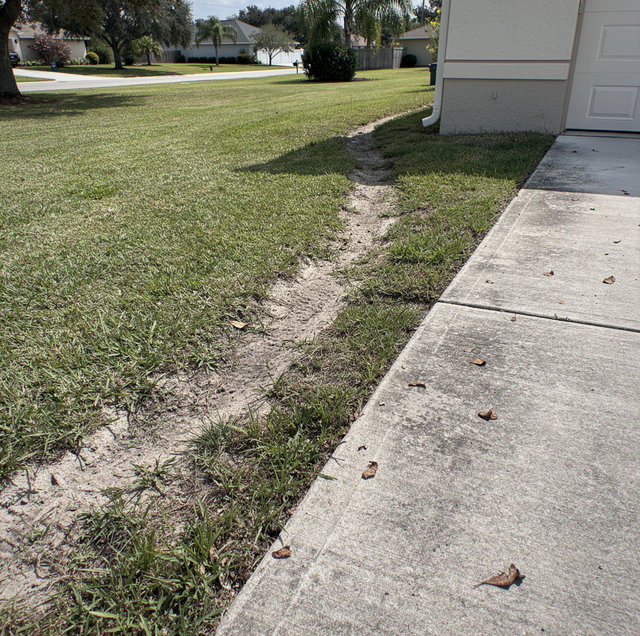
Look at the grass beside your walkway. If there is a strip where the blades never fill in, packed a little lower than the lawn around it, that strip is a record of every trip anyone has made to the front door. Same with the corner people cut instead of following the concrete around it. Grass keeps an honest account of foot traffic, and that account is usually the most useful thing you have when you sit down to decide what happens to an old path.
It also answers a question most of us ask backwards. The first question is not what is wrong with this concrete; it is whether this concrete goes where anybody actually wants to go. A sound, level path that nobody uses is still a path nobody uses. A cracked one on exactly the right line may be worth keeping a while longer.
Removing the concrete walkway is one of three reasonable options. The other two are taking out part of the run, or leaving it alone and building a new route. Which one fits comes down to a handful of things you can check yourself walking your own yard.
Where People Actually Walk
Worn ground is evidence. A single track beside the path, running parallel to it, usually means the walkway sits a step or two off the natural line and people would rather cross grass than swing wide. A groove cut diagonally across a corner means the path takes a turn nobody has patience for. Wear that hugs one edge, with grass creeping over the other, means everyone is using half the concrete.
Watch where the delivery driver goes. Watch where you go when your hands are full. Those are the honest routes, because nobody performs a shortcut for an audience.
Push a marking flag into the worn strip every few steps, then stand at the door and look down it. A route you can see end to end is easier to judge than one you are holding in your head.
If the worn line and the concrete line agree, condition is your whole decision. If they diverge, the concrete has already lost the argument, and what remains is deciding what portion of it comes out.
Width and What the Path Is For
A path serves whatever you actually carry down it. Two people walking side by side without one dropping back. A wheelbarrow with the handles clear of the grass. Trash cans rolled out without a wheel dropping off the edge every few feet. A laundry basket, a stroller, someone steadying themselves on an arm.
Narrow concrete shows this in the grass too: crushed blades along both edges, or a hard-packed shoulder on one side where the second person always ends up. Widening a poured walkway means removing the existing edge and pouring a wider one, which is why partial sections for widening or repair are a normal part of concrete removal work.
Then there is the path that is the wrong shape for its job: a run to a door nobody uses now, or a branch to a shed that came down two owners ago. Those legs are dead weight, and the easiest thing in this decision to say yes to.
The Condition of the Concrete Itself
Cracks are not all the same. A fine, shallow web across the surface is cosmetic and tells you almost nothing. A crack with a lip, where one side has risen or dropped against the other, tells you the ground beneath has moved, and that lip is a physical tripping hazard, the kind of edge a toe catches when someone is carrying something.
Tree roots are the usual cause of the risen side. A root thickens under a panel, lifts it, and keeps lifting it every season the tree grows. Patching the joint does nothing about the root. A panel that has settled low, with sand washed out from beneath it, does not come back up on its own, and each rain carries a little more of the base away.
Surface flaking, where the top skin sheds and leaves the aggregate exposed, can get slick, but on its own it is not a reason to pull a path that otherwise works.
Age gives you a rough sense of what is under there. Older pours tend to be thinner and more lightly reinforced than newer ones. Thicker slabs with heavier reinforcement break up differently, which changes which equipment shows up, so it helps to know roughly when the path was put in.
Water and Where the Path Sends It
Walk the path after a hard rain. Puddles that sit for a long while mean the slab has settled into a dish, and standing water grows the slick green film that makes a sound path feel unsafe.
Bigger than puddles is what the path does to water crossing the yard. A walkway laid across a natural low run blocks the run. Water backs up on the uphill side, saturates that ground, and finds its way around the ends. You see it as a soft, spongy strip along one side of the concrete, or moss where nothing else grows. A downspout aimed at a path washes base material out from under the slab edge until the concrete has nothing solid under it.
Getting a path out of a wet line is often the real reason people call. Once the concrete is gone, the ground it occupied is leveled and sodded so the yard reads as a single surface again.
What Leaving It Does to a Redesign
An old walkway is a fixed line, and every other plan in the yard bends around it. New planting beds get shaped by it. A gravel area stops where it stops. Sod has to be cut to fit against it, and the mower makes an extra pass on both sides for the rest of its life.
In a small yard the effect is bigger: a path across the middle splits the usable ground into two pieces that are each too small for anything. Homeowners often discover this only after removal, when the open space turns out to be the real improvement.
There is also the leftover problem. Build a new route and leave the old one, and you have two paths, one visibly abandoned. Sometimes that is fine. Often it just looks unfinished.
The Three Outcomes and When Each One Fits
Remove all of it: The worn line and the concrete line disagree, or the run is too narrow for its job, or it dams water, or it cuts the yard in a way you want undone. Full concrete walkway removal gives you a clean sheet, and the ground gets leveled and planted back so nothing marks where it was.
Remove part of it: The main run is sound and correctly placed, but one leg goes nowhere, one end needs to widen, or two panels have been lifted by a root while the rest sits flat. Taking out sections is ordinary work, and it is often the answer when a path is mostly right.
Leave it and build a new route: The existing path is sound and sensibly placed, and the route you want serves a different destination rather than replacing this one. A second route to the side gate or the back patio does not require leaving the first path.
One thing to be clear about: the new surface itself is somebody else's trade. We remove concrete and prepare the ground; we do not pour concrete, lay pavers, resurface a slab, or lift a settled one back into place, and, where a permit applies, we help coordinate it rather than pull or issue one. If your new route is poured or paved, plan on a second contractor for that half and sequence the removal ahead of them. Where the path meets the driveway, the apron and the strip at the road are their own job.
How a Walkway Comes Out
Access shapes the plan more than anything else. A compact mini skid steer is light enough to cross a lawn and narrow enough to fit through a standard gate, so a back or side walkway is usually reachable without opening a fence. For thicker or heavily reinforced runs, a full-size skid steer with a hydraulic breaker does the breaking, and the same machine lifts the pieces out.
Concrete comes out in pieces sized for handling rather than in one heroic slab. The base underneath is graded back level, then the strip is sodded, or filled with gravel if that suits the new plan better.
A panel lifted by a tree root is resting on that root. Breaking the slab out exposes it, and cutting a major root to level the ground can hurt the tree, so point out any trunk you want protected first.
Frequently Asked Questions
Usually something private rather than utility-owned. Irrigation lateral lines and low-voltage path lighting are the common finds, and they often went in after the path did, laid along the slab edge because that was the easiest straight run. There are also sleeves someone set under the path so a line could cross it later. Because all of that is private, nothing marks it, and it gets found by hand at the edges before anything heavy moves.
It does. Concrete edging, borders, and trim fall under the same removal scope as the walkway and come out in the same visit. They matter more than they look: a poured edge strip often holds a bed or a bordered planting in place, so pulling it changes what needs to be reset afterward.
It depends on what is planned. A poured path wants the old base left in place and level, so the new work starts on ground that is already compacted. A paver route wants the strip taken lower than finished grade, so there is room for bedding material under the units. Saying which one is coming before removal day means the grade gets set for it on the day rather than corrected afterward.
A step, stair, or landing is vertical concrete and gets scoped as its own item rather than as part of the flat run. Doing both on the same day is normal, but it is planned separately from the walkway.
The run comes out in sections rather than all at once, so a walkable route to the door stays open the whole time. The section right at the door is usually left until last, or the open ground gets a temporary surface laid over it so there is something firm to step on until the grade is finished and the sod is laid.
What gets scoped is the run on your property, and where it ends is decided at the walkthrough. Where it ends is judged against what the remaining stub still has to do: carry the approach to a mailbox, meet a neighbor's walk, or nothing at all. A length left serving nothing usually comes out with the rest rather than staying behind as an isolated island of concrete in the lawn.
Show us the worn line beside your walkway — you get a straight answer on removing all of it, part of it, or none, with the ground left level and ready to plant, from concrete demolition in Bartow to Lithia. Polk Services LLC serves Lakeland, Highland City, and Mulberry. Call (863) 344-5806.
