

Driveway Wrecked by Dump Trucks or Utility Crews? Now What
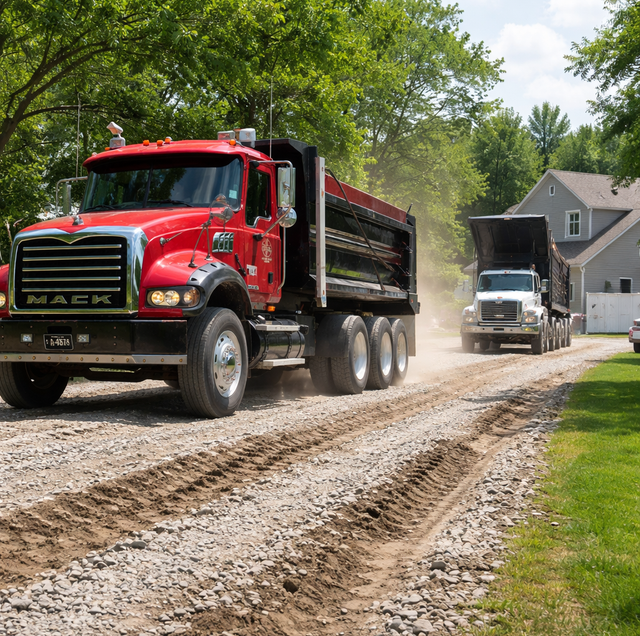
Your gravel driveway held up fine for years, and then a renovation, a new roof, or a utility hookup brought heavy trucks up and down it for a few weeks straight. Now there are two deep ruts where the tires ran, soft spots that weren't there before, and a stretch near the road where the edge has crumbled away. None of that damage happened by accident, and none of it means the whole driveway needs to be torn out and started over. It usually means the surface, the base, or both took more load than they were built for, and each of those problems gets fixed differently.
Why Heavy Vehicles Damage a Gravel Driveway Differently Than Cars
A gravel driveway isn't just loose rock sitting on dirt. Underneath the visible surface layer is a compacted base, ideally a limerock-type base or a well-packed layer of crushed material, that's meant to spread out the weight of whatever crosses it and keep the ground underneath from shifting. A passenger car or a pickup truck puts a modest, evenly distributed load on that base, and the driveway barely notices.
A loaded dump truck, a concrete mixer, a delivery flatbed, or an excavator riding on a trailer is a different animal entirely. That weight concentrates on a handful of narrow tire tracks or, worse, on the trailer's own load-bearing points, and it comes back over the same path trip after trip for days or weeks. The base isn't built to absorb that kind of repeated, concentrated pressure, and it starts to fail in a few specific, recognizable ways.
What Actually Happens Under the Surface
Three separate things tend to go wrong, and they don't always show up together.
Rutting is the most visible: grooves worn into the surface as tires return to the same path over and over. It's the driveway equivalent of a rolling office chair carving a track into carpet after enough passes back and forth, except here the "carpet" is loose gravel over compacted base, and the load coming through that tire is measured in tons, not pounds.
Base displacement is less visible and more serious. Instead of the base staying locked in place, repeated heavy loads push the compacted material sideways and downward, especially where the ground underneath is soft, sandy, or still damp from recent rain. Once the base has shifted, the surface gravel on top has nothing solid to sit on, and it keeps sinking back into the same low spot no matter how many times it's raked level.
Fines pumping is the least visible failure and the one most likely to be missed. Under repeated heavy loading, fine soil particles from a wet subgrade get worked upward into the gravel base above it, contaminating material that's supposed to stay clean and free-draining. Once enough fine soil has migrated up into the base, it no longer drains or compacts as it did originally, and that section starts to hold water and soften even where the surface gravel still looks intact.
Edge Blowout: The Damage That Shows Up at the Margins
The edges of a gravel driveway rarely have the same base depth or compaction as the center, because most driveways are built to carry vehicles down the middle, not along the very outer few feet. When a truck driver has to swing wide to make a turn, back a trailer into position, or squeeze past parked equipment, the tires often ride along the weaker edge rather than the reinforced center. The result is a crumbled, uneven margin where gravel has been pushed outward, and the base underneath has partially collapsed, sometimes dropping an inch or more below the rest of the driveway's grade.
Edge blowout is also the damage most likely to keep getting worse on its own, even after the trucks are gone. Water runs toward that low, broken margin during every rain, and each pass of a normal car or delivery van after that adds a little more stress to material that's already lost its support.
How Utility Trench Work Damages a Driveway Differently
Truck traffic tears up the surface from above. Utility trench work tears up the base from below, and that's a different repair problem, even when the visible symptoms look similar.
When a crew digs a trench across or alongside a gravel driveway to run a line, they cut straight through the compacted base, removing it. Backfilling the trench puts loose material back into the cut, but loose fill doesn't have the same density as the base compacted in place, even when it's put back in stages and tamped down along the way. Over the following weeks, especially after a few good rains, that backfill continues to settle, and a driveway that looked fine the day the trench was closed can develop a visible dip or soft spot months later as the fill keeps compressing.
That's the key difference a repair plan has to account for: surface rutting and edge blowout are usually a shallower fix, while trench backfill settling can keep reappearing until the base itself is properly recompacted and, in some cases, reinforced.
| Damage source | What it typically does | Where it shows up |
|---|---|---|
| Heavy trucks (dump trucks, delivery, equipment haulers) | Rutting along repeated tire paths, edge blowout on turns | Center travel lanes, driveway margins near the road |
| Utility trench work | Base displacement, delayed settling as backfill compresses | A line running across or alongside the driveway |
| Frequent lighter delivery/service trucks | Gradual compaction loss and surface thinning, rarely deep ruts | Wherever trucks routinely stop or turn around |
Repair or Full Rebuild: How to Tell Which One a Driveway Needs
Not every driveway that took a beating during construction needs to be rebuilt from the ground up, and not every one can get away with a light patch either. The difference usually comes down to how deep the damage goes.
If the ruts and low spots are limited to the surface gravel and the base underneath still feels solid when you walk or drive it, that's a resurfacing job: regrading the existing material, adding fresh gravel or crushed asphalt millings where the layer has thinned, and compacting it back into a stable, even surface.
If the base itself has shifted, if there's a persistent soft spot that reappears no matter how many times it's been raked and topped off, or if a section keeps pooling water after a rain that drains fine everywhere else, that's usually a sign the compacted base has failed in that spot and needs to come out and be rebuilt, not just covered over.
Before deciding whether a rut needs a full base rebuild, probe it. Push a length of rebar or a long screwdriver by hand into the bottom of the rutted spot and compare how easily it sinks against a section of driveway that was never trucked over. Noticeably less resistance in the rut means the base has been displaced or contaminated, not just the surface.
What a Proper Repair Actually Involves
A resurfacing repair typically starts with a mini skid steer or a box blade pass to cut down the high edges of existing ruts and pull loose material back into the low spots, followed by fresh gravel, crushed asphalt millings, or crushed concrete worked in and compacted to match the surrounding grade.
A base repair goes a step further. The damaged section gets excavated down past the failed material, geotextile fabric is laid across the exposed subgrade to keep the new base from working its way down into the soft soil underneath the way the old one did, and a fresh layer of crushed material is brought in and compacted in place before the surface gravel goes back on top. Skipping the fabric layer on a spot that's already shown it can't hold a base is one of the more common reasons the same soft spot comes back within a season.
Edge blowout gets handled a little differently: the collapsed margin is rebuilt with compacted base material tucked back to the original edge line, then topped and blended so the repaired section carries load the same way the rest of the driveway does, instead of staying the weak point trucks find again the next time heavy equipment needs to turn around.
What Happens If the Damage Gets Left As-Is
Left alone, none of these three problems tends to stay the same size. Ruts channel rainwater instead of letting it sheet off, which speeds up erosion right along the path a car's tires already follow. A soft spot from base displacement keeps compressing under normal traffic and usually gets deeper, not shallower, over time. And a blown-out edge with no support underneath continues to lose material every time water runs toward that low point, gradually eating further into the driveway than the original truck traffic ever reached. Catching the damage while it's still a surface or edge repair is almost always a smaller job than waiting until it's spread into the base.
Frequently Asked Questions
Temporary measures like laying plywood sheets or steel matting over the worst soft spots can keep a driveway usable during active work, but a real regrade and compaction pass should wait until the heavy truck trips are done. Repairing a section that's still getting loaded daily just means redoing the same work again once the project wraps.
Yes, and it affects the two damage types differently. Saturated base material loses compaction faster under load, so existing ruts tend to deepen with each rain rather than staying the same depth. Utility trench backfill is especially sensitive to this: proper backfill goes back in thin lifts, a few inches at a time, each one compacted before the next lift is added, rather than dumped in and tamped once at the top. Skip that step and the fill looks solid on the surface while leaving voids lower down that rainwater finds and washes out, often surfacing weeks later as a new low spot instead of showing up right away.
Not immediately. Fresh crushed asphalt millings darken and bind together as they compact and oxidize over the following weeks, so a newly repaired patch can look noticeably lighter than the surrounding, weathered material until it catches up. That color difference fades on its own and isn't a sign the repair was done wrong.
A box blade or grading pass can make shallow ruts disappear visually in a single afternoon, but blading alone only works if the base underneath is still sound. The way to check before deciding is to probe it: push a length of rebar or a long screwdriver by hand into the bottom of the rutted spot and compare how easily it sinks against a section of driveway that was never trucked over. If it sinks in with noticeably less resistance in the rut than in the sound section, the base has been displaced or contaminated, not just the surface. As a rough guide, ruts under an inch or so that are limited to the gravel layer are usually fine to blade smooth; deeper than that, or any spot that stays soft when probed, needs the base rebuilt rather than smoothed over.
It can. Reopening a trench that was already backfilled and compacted disturbs that section a second time, and if the original repair didn't include a geotextile fabric layer, the base is more likely to need full recompaction again rather than a quick top-off.
The compacted surface is usually driveable right away, but full settling, especially over a rebuilt base section, happens gradually over the next several rain cycles as the material continues to lock together under normal traffic. A brief follow-up regrade pass after that initial settling is common and expected, not a sign the first repair failed.
Getting the Diagnosis Right the First Time
Whether the damage came from a dumpster truck backing in twice a day for a month or a utility crew cutting a single trench across the driveway, the fix depends on how far down the damage actually goes, and getting that read right the first time is what keeps a repair from turning into a repeat visit.
Schedule a driveway repair estimate — get a free on-site assessment of ruts, soft spots, or edge damage from construction or utility work. Polk Services LLC serves Lakeland, Highland City, and Mulberry. Call (863) 344-5806.
