

Best Gravel for a Driveway on Florida's Sandy Soil, Ranked
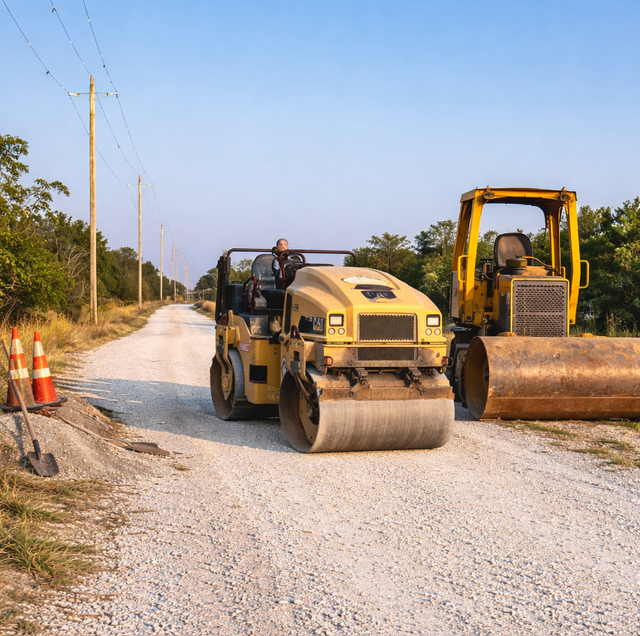
Two driveways built from the same material, millings or crushed concrete or whatever else, can behave differently depending on what's underneath them, and that gap widens once the subgrade itself is loose, fine, uniform sand rather than a soil with more natural cohesion. General material rankings, the kind that weigh durability, drainage, and appearance side by side, tend to treat the subgrade as a constant. On a sandy Central Florida lot, it isn't one: sand's fine, rounded grains lock together through friction rather than cohesion, and that shortfall doesn't disappear just because a load of stone got dumped on top of it. The question worth asking is which material's particle mix best compensates for what the ground underneath can't offer on its own, since sandy ground provides far less support than denser soil.
Why Material Choice Works Differently on Sandy Subgrade
Loose, fine sand gives a base course less to push back against than denser soil does, since the base ends up doing more of the load-bearing work on its own rather than leaning on subgrade resistance (the full mechanics of why sandy subgrade behaves this way are covered in our sandy-soil compaction guide). What that shortfall means for material choice specifically is the angle this ranking works through: a material that already carries its own wide range of particle sizes and enough fines to lock together under compaction doesn't need to lean on the subgrade for that resistance the way a single-size, rounded material does, so that internal structure carries more weight in the material decision on a sandy lot than it would over firmer ground.
Materials With Their Own Fines Rank Highest on Sandy Ground
Three materials on a standard driveway list carry a wide range of particle sizes and sufficient fines to interlock under compaction: crushed asphalt millings, crushed concrete, and limerock. On firmer soil, that gradation earns them a strong ranking for durability and drainage. On a sandy subgrade, it does something more specific: it lets the material provide its own interlock instead of relying on ground that can't reliably provide it.
Crushed asphalt millings: the residual asphalt binder that softens slightly under sun and pressure gives millings a self-binding quality none of the other five materials have, and that matters more on sandy ground because the finish layer isn't counting on the subgrade to help hold it in place once it firms up. On a sandy lot, that self-binding top layer does double duty: locking the surface and limiting how much fine material works its way down toward the fabric and the loose sand below it.
Crushed concrete (recycled concrete aggregate): the mixed gradation, from coarse rubble to fine concrete dust, gives RCA an interlocking strength close to millings, without any binder to soften. That gradation range is the same trait that lets it compact into a dense mat over firmer soil, and it carries over to sandy ground for the same reason: the material's particle mix does the interlocking work on its own, without leaning on the ground underneath. Gradation can vary between suppliers and batches, since RCA comes from mixed demolition sources rather than a controlled quarry process, so a load that's mostly coarse chunks with little fine dust mixed in won't lock together the way a properly graded load does, regardless of subgrade.
Limerock: limestone screenings run a mixed gradation of larger pieces and a heavy load of fine limestone dust, and it's that dust that fills the voids between the larger particles and locks the layer together under compaction. That fines-heavy mix makes limerock a strong performer on sandy ground for the same reason as the other two, though the fine dust doing that locking work is also the part most easily carried off by a hard, driving rain if the grade isn't shedding water the way it should. Florida's heavier downpours put more of that fine material into motion than a light, steady rain would, which is one more reason a limerock surface on a sandy lot benefits from a crown or cross-slope that's actually shedding water, not just present on paper.
Angular Crushed Stone Needs a Graded Base Underneath It More on Sand
Angular clean stone grips well against its neighbors thanks to its sharp, broken edges, but it's washed to a single, fairly uniform size rather than carrying the mixed gradation the three materials above do, so it depends more on whatever's underneath it to stay put. Over firmer soil, a subgrade that still resists and holds some of the load partly covers for that gap. Sandy ground doesn't offer the same backup, which means a full driveway depth built entirely from clean stone is asking a friction-only material to sit on friction-only ground, with nothing in the stack providing real cohesion. It still has a place on a sandy lot as a fast-draining top course over a properly built base; carrying the full depth on its own is where it comes up short.
Pea Gravel and River Rock Compound What Sandy Soil Already Lacks
Pea gravel and river rock carry the same weakness wherever they're used: their rounded shape barely grips against itself, so it shifts under tire weight rather than settling into place. That's true regardless of subgrade, but what changes on sandy ground is what's underneath to compensate for it. Over firmer soil, a loose rounded layer at least sits on a subgrade with some natural structure of its own. Over loose sand, that structure isn't there either, leaving nothing in the build, top layer, or ground holding the system together while it settles under traffic. A pea gravel or river rock driveway on sandy Central Florida ground tends to need raking and topping off sooner than the same material would over denser soil, on top of the upkeep it already needs anywhere it's installed.
The Ranking Assumes the Fabric and Base Prep Are Right
This ranking still assumes the fabric and base prep underneath the finish material are matched to the sand in the first place, a separate set of adjustments (fabric aperture sized to the sand's fine grain, extra lifts or compaction passes to reach adequate bearing capacity) worth working through on its own. Material choice sits on top of that foundation rather than replacing it: the best-suited material over an under-compacted sandy subgrade, or one where the fabric was never matched to the sand, will still underperform, and a well-prepped subgrade under the wrong material won't fully make up for it either.
Choosing Between the Top Three for a Sandy Lot
Millings, crushed concrete, and limerock all bring the gradation a sandy subgrade needs, so the choice between them on a sandy lot comes down to secondary factors more than to which one compacts hardest. Millings' self-binding top layer makes it the most forgiving choice when the subgrade is on the looser end of sandy, since the surface locks together with less dependence on what's happening below. Crushed concrete comes in close behind it and holds up better to occasional exposure to fuel or oil, since there's no residual asphalt content to soften. Limerock earns its place where a pale, compact surface matters more than a dark one, though it benefits most from a well-shaped crown on a sandy lot, since its fines are the part most vulnerable to washing if the grading isn't right. Angular clean stone and the two rounded materials aren't disqualified from a sandy lot; they're better suited to a supporting role, a wear course, a border, a drainage accent, than to carrying the full weight of a driveway on ground that already has less structure to offer than most.
Frequently Asked Questions
Yes, past a point. The same fines that let millings, crushed concrete, and limerock lock together also reduce how fast water passes straight through the material, which matters less on a well-drained sandy lot than it would on denser soil, since the sand underneath is already handling water quickly on its own. The practical concern is surface ponding from a flat or reverse-graded run, not fines blocking drainage into ground that already drains fast, so a proper crown or cross-slope matters more to drainage on a fines-rich sandy-lot driveway than the fines content itself does.
The layering itself doesn't change: the coarser base material still goes down first, with a finer finish layer on top, just like any driveway build. Depth can change; an added lift of base material is sometimes what it takes to reach adequate bearing capacity on notably loose sand, and so can compaction effort on the lift closest to the subgrade: extra passes or a moisture check before moving to the next lift. Whether that lot calls for the extra lift, the extra compaction effort, or both comes down to how loose the sand runs and how deep it goes before hitting firmer ground, something worth having assessed on site rather than assumed from the general soil type.
Mostly yes, applied just to the sandy sections. A driveway that transitions between loose sand and firmer soil doesn't need a uniform material choice end to end: the firmer stretches can carry angular clean stone or even a rounded material without the same penalty sandy ground imposes, while the sandy patches benefit from sticking to the fines-rich materials ranked above. What matters is identifying where the transition occurs, rather than assuming the entire corridor behaves like the soil type easiest to see from the road.
For a low-traffic spur, like a short parking pad or a walking path rather than a daily-use driveway corridor, a single-size clean stone over a properly compacted sandy subgrade can hold up well enough, since the load and traffic frequency are lighter than those of a full driveway. For a primary driveway subject to daily vehicle loads, the lack of a self-supporting gradation is more of a liability on sandy ground than on firmer soil, for the reasons covered above, and it's better used as a wear course over graded material than as the entire depth.
It narrows the gap between materials rather than erasing it. A stabilized subgrade gives the base course some of the resistance loose sand doesn't provide on its own, which is the whole reason material choice matters more on sandy ground in the first place. Once that resistance is added back in, a material like angular clean stone performs closer to how it would on firmer soil, though the three fines-rich materials above still hold an edge, since stabilization changes what the subgrade offers, not what a given material brings to the surface on its own.
Grab a handful from a few different spots in the pile. Material with visible dust clinging to the coarser pieces, or fine particles that pack together slightly when squeezed, has the gradation that locks together under compaction. A load that's almost entirely clean, with similarly sized chunks with no dust or fine material mixed in, behaves closer to angular clean stone regardless of what it's labeled as, and on a sandy lot specifically, that's worth flagging with the supplier before it gets spread rather than after compaction shows it isn't firming up.
Get material matched to your sandy lot — we evaluate your subgrade and recommend the gravel type and base build suited to it. Polk Services LLC serves Lakeland, Highland City, and Mulberry. Call (863) 344-5806.
