

When a Gravel Driveway Repair Needs a Pro, Not a Weekend
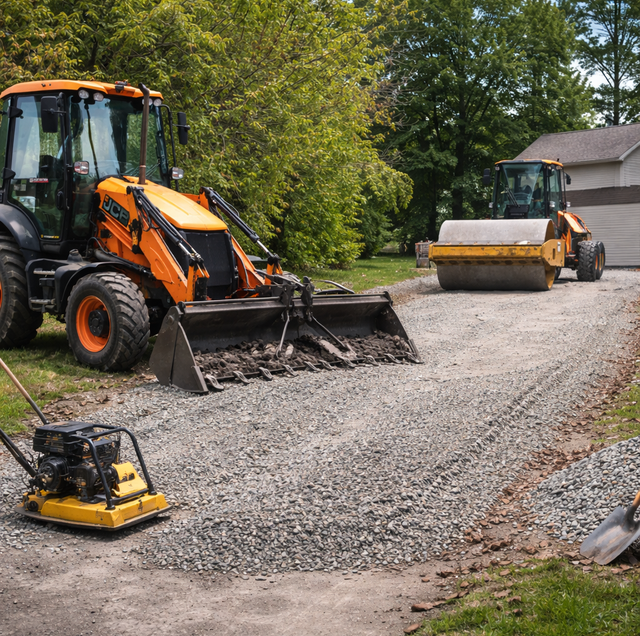
A rutted or sunken gravel driveway raises two separate questions, and it's easy to answer the wrong one first. The first question is what's wrong, since ruts, washouts, and recurring potholes each point to a different cause, and that diagnosis is worth working through before anything else. The second question, the one this article is about, is whether the fix that diagnosis points to is something a property owner can reasonably take on themselves, or whether it's crossed into territory where a homeowner with a truck full of gravel bags is more likely to make the problem worse than fix it.
That line comes down to three things: what equipment can realistically be rented and operated safely, a utility-locate step that comes before any real digging, and judgment calls about what's buried or protected on a property that aren't obvious just by looking at the ground.
The Equipment Line: What a Rental Yard Will Get You
A walk-behind plate compactor is a reasonable rental for a homeowner tackling a small, isolated surface repair, a shallow rut, a thinned patch of finish stone, or a few square feet that have lost compaction only at the top layer. It's light enough to handle without special equipment, simple enough to run after a five-minute demo at the counter, and sized appropriately for compacting a shallow surface patch in thin layers rather than a single thick dump of loose stone.
That same logic breaks down once the repair extends beyond a patch and into a full section of the driveway. A ride-on or towed roller, the equipment needed to compact a base evenly across a wide run rather than in isolated passes with a plate, weighs enough that it needs a trailer, a vehicle rated to tow it, and enough operating experience to avoid over-compacting one strip while leaving the next one loose. Grading equipment is the other half of that gap: getting a consistent crown or cross-slope across a long driveway, so water sheds off both edges the way it's supposed to, takes a box blade run behind a tractor and an operator who can read the existing grade while working it, not a rake and a level pulled behind a lawn mower. Both of those are a different tier of job than a rented plate compactor and a few bags of crushed stone, since running them correctly on a full driveway base takes equipment most rental yards don't hand a first-time operator, plus skill that doesn't come from a quick walkthrough.
Utility Locates: The Step That Comes Before Real Digging
Any repair that goes past surface-level scratching, cutting into a rutted low spot, excavating a soft spot down to rebuild the base, or digging along an edge to fix a blowout means digging into ground that may have utility lines running through it. Calling 811 to have utility lines marked before excavation is standard practice on every job a contractor plans and schedules, because hitting a gas, water, electric, or communications line during a repair turns a driveway job into a utility emergency, sometimes a dangerous one.
Never dig into a rutted low spot, soft spot, or edge blowout without calling 811 first. A buried line's actual path doesn't always match where it appears to run above ground, so a spot that looks clear from the surface can still hit gas, electric, or water service underneath it.
A homeowner digging out a soft spot on a Saturday afternoon without having the lines marked first isn't just risking a repair bill. A line's actual path underground doesn't always match where it appears to run above ground, so a dig that looks clear from the surface can still hit something. A contractor's excavation process is built around getting locates marked and confirmed before the first shovel or excavator bucket goes in, precisely because that's the kind of mistake that's disruptive, hard to undo after the fact, and nearly free to avoid beforehand.
Septic Fields and Drainage Easements: Judgment an Untrained Eye Misses
Some of the riskiest DIY driveway repairs come down to what the digging is near, more than the digging itself. A septic drain field isn't always marked or obvious at the surface, and compacting heavy base material or digging and backfilling too close to one can damage the field or interfere with its designed dispersal. How close is too close, and where the field's actual boundaries sit, is often not something a homeowner can determine by eye; it typically requires checking a septic permit record or site plan, and the setback expectations vary by jurisdiction and by the specific system installed, so this is one to verify locally rather than assume.
A drainage easement raises a similar problem. Some properties have a protected drainage path, natural or engineered, that carries water for the property itself or for neighboring lots, and that path isn't always visible as anything more than a low spot or a shallow swale that looks like it could use some fill. Regrading over one, or narrowing it with new base material, can push water somewhere it was never meant to go, sometimes onto a neighboring property, sometimes back toward a structure. Whether a given low spot is a protected easement or just an unremarkable dip in the yard is exactly the kind of call that benefits from someone who's trained to recognize the difference, since the consequences of guessing wrong show up as a new problem rather than a fixed one.
What a Wrong Guess Buys You: The Same Job Twice
This comes down to what happens when a repair addresses the symptom instead of the cause. A DIY fix that fills a rut or tops off a sinking spot without touching what's wrong underneath- an under-compacted base, a missing layer of geotextile fabric that's letting fine soil pump up into the stone, a lost crown that's no longer shedding water- tends to hold for a while and then fail again in the same spot. At that point the section usually needs to be excavated and rebuilt properly anyway, which means the DIY attempt added a step instead of saving one. The repair still needs to be done at the professional level; it just happens after a homeowner has already spent time, stone, and effort on a version of it that didn't hold up.
The real risk worth weighing before deciding to take on a repair solo is whether the first attempt addresses the layer causing the problem, rather than whether it looks fine the day it's finished. A patch that only ever touches the surface gravel is likely to need redoing, and redoing a job takes more time and effort than getting the diagnosis and depth right the first time would.
When a Small DIY Repair Still Makes Sense
Not every repair needs a call to a professional. Light surface wear, a shallow rut under an inch that doesn't hold water, or a small area where stone has migrated and thinned is a reasonable candidate for a homeowner to handle with a rake, a plate compactor, and fresh material. The line isn't the size of the driveway; it's whether the repair stays above the base, stays away from anything buried or protected, and stays within what a rented plate compactor can reasonably handle on the surface layer. Once any of those three conditions is no longer true, the job moves into a different category. A separate diagnostic guide covers how to read the specific damage pattern and distinguish cosmetic wear from a structural drainage problem, which is worth working through before deciding anything else here.
Frequently Asked Questions
Most areas require a lead time of a few business days after an 811 request before excavation can start, though the exact waiting period varies by state and utility provider. Lines get marked with color-coded flags or spray paint corresponding to the type of utility: electric, gas, water, communications, so a homeowner or crew has a general read on what's buried and where before the first cut goes in.
Yes, and it's a significant one. A homeowner-rentable plate compactor typically weighs a couple hundred pounds, light enough for one person to walk behind and maneuver by hand. A ride-on or towed roller used for compacting a full driveway base commonly weighs well over a ton, which is why it requires a trailer, a properly rated tow vehicle, and enough operating familiarity to avoid leaving inconsistent density across the run.
The marks a locate technician leaves are approximate, not exact, since the paint or flag shows a general path rather than the line's precise depth or lateral position. That's why a contractor's crew still hand-digs, exposing a marked line by hand rather than with a bucket, once excavation gets within a couple of feet of any flagged utility, instead of trusting the paint as a hard boundary and running equipment right up to it.
A property's plat map or survey, often available through the county recorder's office or included in closing documents from when the property was purchased, usually shows recorded easements, including drainage easements. Some easements are also visible in a homeowners' association's site plan if the property is part of one. Checking that record ahead of time is a faster way to confirm what's protected than guessing from the shape of the yard.
It's worth checking regardless of how close the visible field markers seem, since drain lines can extend beyond the surface indicators and compaction from heavy equipment can affect a field even without direct digging. Local health departments that regulate septic permitting can often confirm a field's recorded boundaries on request.
Often, yes. A section that's already failed once typically gets excavated deeper than the original repair, since the goal is to remove whatever caused the first attempt to fail rather than build a second layer on top of the same weak base. That's part of why a repair that gets diagnosed and scoped correctly the first time tends to hold better than a second attempt layered on top of the first.
Request a driveway repair assessment — get a professional read on whether your gravel driveway needs a rebuild, a regrade, or a repair a DIY fix can't safely reach. Polk Services LLC serves Lakeland, Highland City, and Mulberry. Call (863) 344-5806.
